
Folk and Traditional Music Radio Around the World
October 21, 2026 · Updated November 02, 2026
Folk music is the music of communities. It is passed from person to person, often without being written down, and it carries the language, history and humour of the people who sing it. Because every region has its own traditions, folk radio is one of the most varied things you can find online. This guide explains what folk and traditional music are, introduces some of the world's main traditions and shows you how to find them.
What counts as folk music?
There is no single definition, but folk music usually has several features. It is often learned by ear, passed down over generations, and associated with a specific place or community. The songs tell stories about work, love, migration, celebrations and history. The instruments tend to be acoustic and local. The term "traditional music" is often used for the same idea, especially in Europe, while "folk revival" describes a movement from the mid-20th century in which musicians in the UK, the US and elsewhere rediscovered older songs and wrote new ones in the same spirit.
Europe
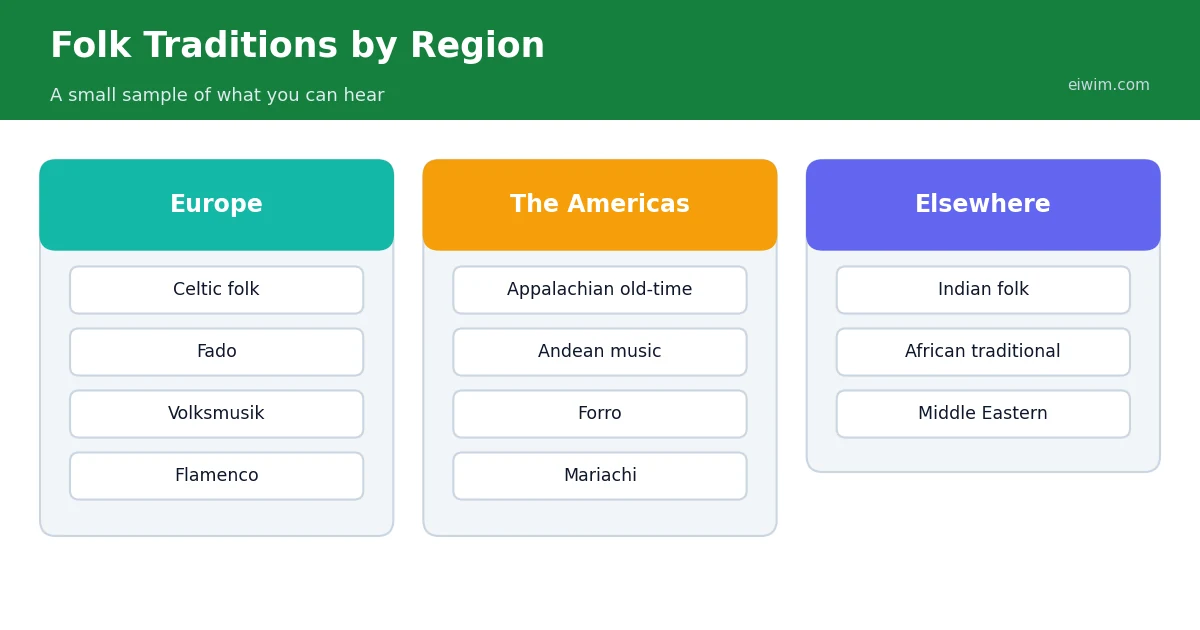
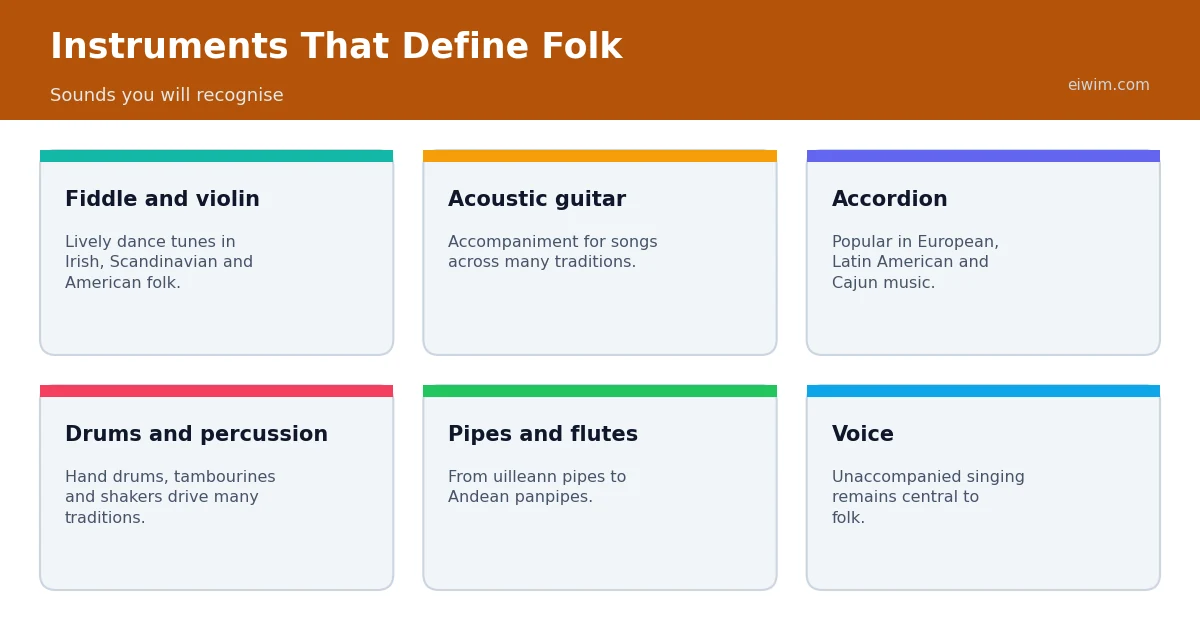
Europe has a very large range of folk music. Celtic traditions from Ireland and Scotland are known for lively fiddle tunes, pipes and ballads, and they are widely played on folk radio. In Spain, flamenco from Andalusia combines guitar, singing and rhythmic hand clapping, while in Portugal fado is a style of mournful, expressive song. You can find fado under Fado on Eiwim. In Germany and Austria, folk and popular traditional music is known as Volksmusik, and the German Folklore category lists many stations. Scandinavia, the Balkans and Eastern Europe all have rich traditions with distinctive scales, rhythms and instruments.
The Americas
In North America, the folk story includes Appalachian old-time music, which came with settlers from the British Isles and combined with African-American influences, giving rise to country and bluegrass. Our guide to country music subgenres covers that thread. In Latin America, regional traditions include Mexican mariachi and ranchera, Andean music with panpipes and charango, and Brazilian forró and samba. If you want to explore Mexican styles, see Mexican radio.
Asia, Africa and the Middle East
Folk music in Asia and Africa is just as varied. India has regional folk traditions in every state, from Punjabi bhangra to Baul songs in Bengal. In Africa, traditional music is often rhythmic and communal, with drums, thumb pianos and call-and-response singing, and it has influenced many global genres. In the Middle East and North Africa, instruments such as the oud and the qanun support modal melodies. On Eiwim you can browse Asian, African and Oriental stations to hear these styles.
Folk, world music and traditional music: what is the difference?
Different directories use different words. On Eiwim you will see several categories that overlap:
- Folk usually describes acoustic, song-based music in the Western folk tradition.
- Traditional and Traditional music cover heritage music from any region.
- World is a broad label for music from many cultures, often including modern fusions.
Because the labels are used loosely, it helps to try a few of them rather than relying on one.
Why folk works well on radio
Folk programmes often include conversation, history and storytelling, which suits radio well. Presenters introduce songs, explain their origins and invite musicians to perform live. Many folk stations are run by enthusiasts or community groups, and they feature local musicians who rarely appear elsewhere. In the evening, a folk programme can feel like a conversation with a well-informed friend.
Learning languages through folk songs
Folk songs are a great way to hear a language in context. They often have simple lyrics, repeated choruses and clear singing. Learners can follow a song, look up the lyrics and sing along. Our guide to learning a language with online radio explains how to do this step by step.
How to explore folk radio
- Start with the Folk category for a broad introduction.
- Pick a region you are curious about and browse its stations by country.
- Try a station in a language you do not speak. Listening for rhythm and mood is enough to enjoy it.
- Note instruments and styles that you like and look for stations that feature them.
Respecting the tradition
Many folk songs belong to specific communities and have cultural or religious significance. When you listen to music from a culture that is not your own, it helps to learn a little about its context. Station descriptions and presenters often give that background, and many stations welcome questions and requests from listeners.
A four-week listening plan
If you want a structured way to explore, try spending a week on each of four traditions. In the first week, listen to Celtic and British folk, paying attention to the fiddle, the pipes and the ballads that tell long stories. In the second week, move to Southern Europe and listen to flamenco and fado, noticing how the singers use emotion and ornament. In the third week, explore Latin American folk, from Andean flutes to Brazilian accordion music. In the fourth week, choose the tradition of your own region or heritage and see how radio presenters talk about it. By the end you will have a rough map of the main sounds and a short list of stations you want to keep.
Sessions, festivals and live folk
Folk music is often best experienced live. In Ireland, informal music "sessions" in pubs and homes are a long-standing tradition, where players join in on shared tunes. The folk revival of the mid-20th century produced major festivals, and the Newport Folk Festival in the United States, first held in 1959, became one of the best known. Many folk stations broadcast recordings from festivals and sessions, which let you hear music that is rarely released commercially.
Frequently asked questions
Is folk music always old?
No. Many songs are centuries old, but new songs are also written in folk styles, and modern artists often mix folk with rock, pop and electronic music.
What is the difference between folk and country?
Country grew from folk traditions in the American South, but it developed a recognisable commercial sound. Folk is a wider term for traditional music from many places.
Where can I hear German folk music?
Try the German Folklore category and stations from Germany, Austria and Switzerland.
Do I need to understand the language to enjoy folk songs?
No. Melody, rhythm and instruments communicate a lot, and many presenters explain song meanings between tracks.
For more ways to explore, visit the genres page.