
Gospel and Christian Radio: Styles, Traditions and How to Find Them
October 25, 2026 · Updated November 01, 2026
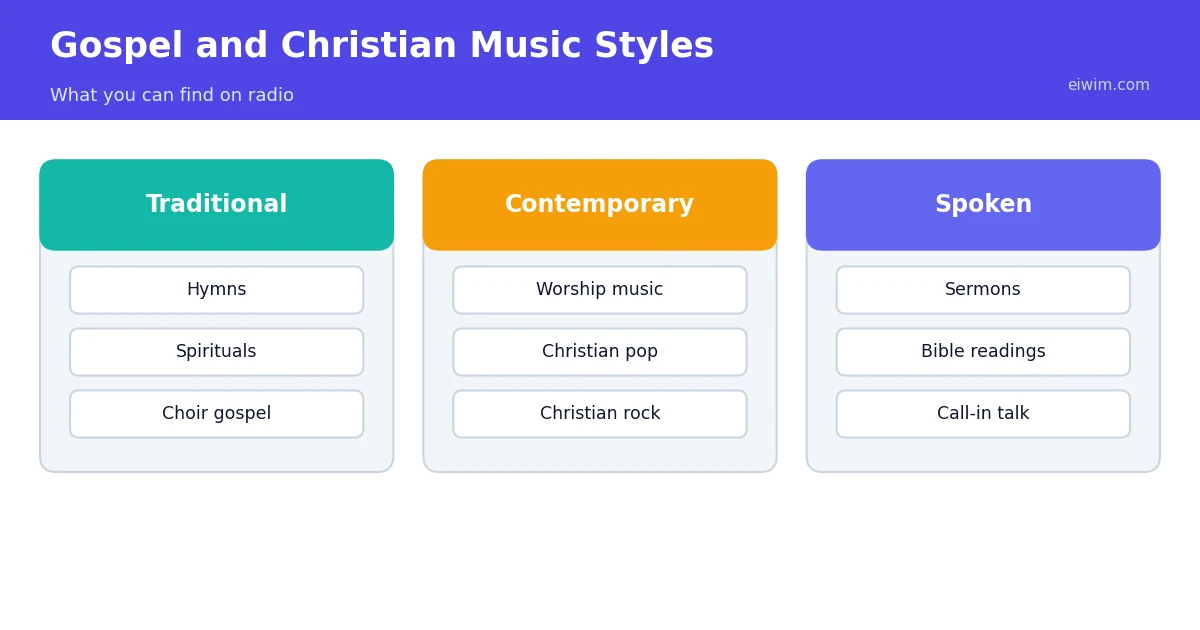
Gospel and Christian radio serve some of the most devoted audiences in broadcasting. These stations mix music, teaching and community announcements, and they range from small local stations to large networks that broadcast across continents. Whether you want a choir, a classic hymn, modern worship songs or a weekly sermon, online radio makes it easy to find. This guide explains the main styles and how to explore them respectfully, whatever your own beliefs.
What is gospel music?
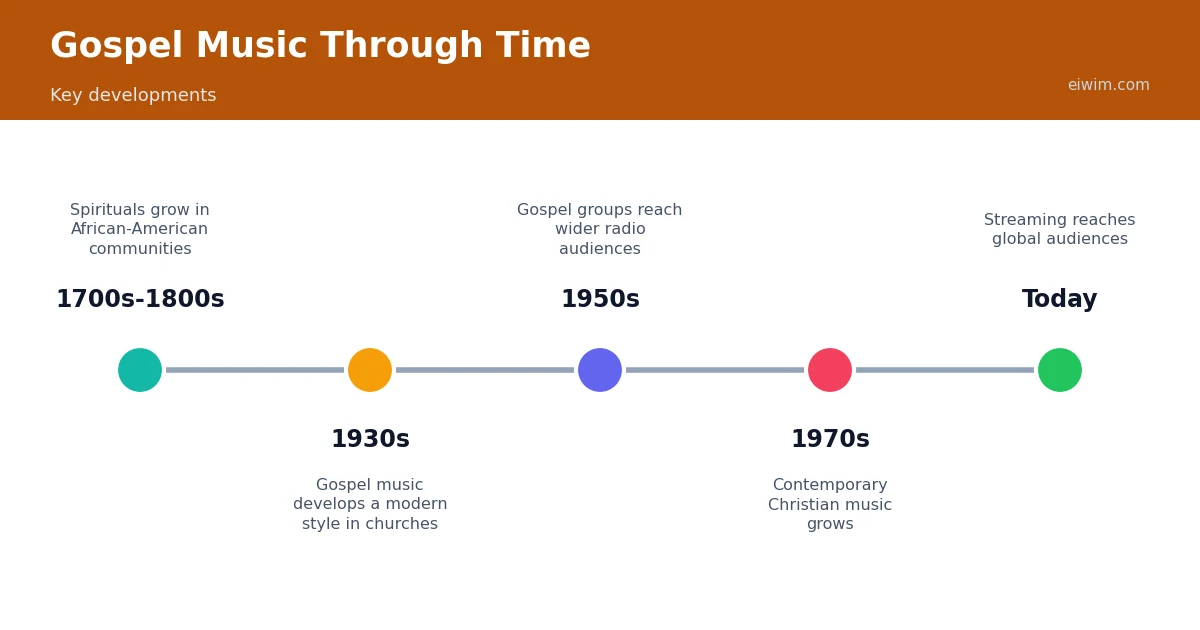
Gospel music is Christian music with strong roots in the African-American church tradition. It grew from earlier spirituals, songs created by enslaved people and their descendants, that combined biblical themes with expressive singing. In the early 20th century, gospel developed a more modern style with piano and organ, powerful lead vocals and choirs. Artists such as Mahalia Jackson helped bring it to wide audiences, and Thomas A. Dorsey is often called a father of gospel music for his songwriting and organising work. Gospel has also strongly influenced soul, R&B and rock.
Traditional styles
- Hymns are congregational songs sung in churches around the world. Many have been sung for centuries and are often played on traditional or heritage stations.
- Spirituals are early songs from African-American communities, often performed by choirs or solo singers.
- Choir gospel features large vocal groups and call-and-response singing, usually with piano, organ and drums.
- Quartet gospel centres on tight vocal harmonies, usually from four singers.
Contemporary Christian music
From the 1960s and 1970s, a new movement began to apply popular styles to Christian lyrics. Today, contemporary Christian music includes pop, rock, folk, hip hop and electronic styles. Many church congregations use modern worship songs that are simple to sing in groups, and these songs often reach radio. On Eiwim you can find stations in the Christian Contemporary, Christian Music and Gospel categories.
Spoken content on Christian radio
Many Christian stations also broadcast sermons, Bible teaching, interviews and call-in programmes. These programmes may be produced by local churches or by national ministries. Some stations also provide news with a religious perspective, community announcements and programmes for children. Because these programmes express religious views, listeners who are curious about a tradition should remember that they are hearing one perspective.
Different traditions and languages
Christian radio is diverse. Catholic, Protestant, Orthodox and Pentecostal stations each have their own style, and the music can be very different. In Latin America you will find stations with Spanish and Portuguese worship music. In Africa and Asia, local-language gospel music is widely popular. In Europe and North America, you will find stations in many languages, including English, German, Polish and French. Browse stations by language or country to find the tradition you prefer.
Why people listen
For many people, religious radio is a source of comfort, community and routine. Listeners may use it during the morning, during commutes or at home with family. Others, including people who are not religious, enjoy the musical quality of gospel choirs, the history of hymns or the cultural significance of the music. Some simply listen to understand a tradition better.
How to explore
- Start with the Gospel category if you want choir and church music.
- Try Christian Music or Christian Contemporary for modern worship and pop.
- Look for stations that describe their programming so you know whether they play music, talk or both.
- If you enjoy gospel's musical side, branch out to Soul, Blues and R'n'B, which share many roots.
Listening with respect
When you listen to a station from a faith tradition that is not your own, it helps to approach it with curiosity rather than judgement. Read the station's description to understand its aim, and keep in mind that views and teaching differ across denominations and communities. If you share a device with others, set the volume considerately, especially in shared spaces.
Related reading
Gospel is closely tied to the story of soul and R&B. Our guide to soul, Motown and R&B radio shows how gospel singers shaped popular music, and our guide to blues radio covers another American tradition with deep roots in the same communities.
A listening guide by mood
One of the simplest ways to enjoy gospel and Christian radio is to choose by mood rather than by label. When you want energy, look for choir gospel and quartet stations, where the drums, organ and handclaps drive the music. When you want calm, hymn and instrumental stations offer slow, reflective songs that work well for quiet mornings. When you want songs you can sing along to, contemporary worship stations focus on simple melodies and repeated choruses. Because many stations mix these moods across the day, you can often find a pattern: livelier music in the morning, softer music in the evening, and teaching programmes at set times.
The sound of the instruments
Traditional gospel has a recognisable instrumental sound. The piano and the Hammond organ provide harmony and drive, drums and bass keep a strong pulse, and tambourines and handclaps add rhythm. Choirs sing in layers, with a lead singer calling and the group responding. In contemporary worship, acoustic and electric guitars, keyboards and drums lead the sound, and the arrangements are often built to allow a whole congregation to sing along.
Gospel in popular music
Gospel has shaped popular music so strongly that you may already know its sound. Aretha Franklin recorded a live gospel album in a Los Angeles church in 1972, and it became one of the best-selling gospel albums of all time. Many of the great soul singers learned to sing in church. If you enjoy how a singer holds a note and then lets it rise, you are hearing a gospel technique at work.
Seasonal programming
Religious stations are especially busy around holidays. Around Christmas and Easter, many broadcast carols, choir concerts and special services, so these weeks are a good time to hear choral music even if you do not usually listen.
Frequently asked questions
What is the difference between gospel and Christian music?
Gospel usually refers to music rooted in the African-American church tradition, with choirs and expressive vocals. Christian music is a broader term that includes many styles with Christian lyrics.
Are gospel stations only for religious listeners?
No. Many people enjoy gospel for its musical qualities, history and emotional power, regardless of belief.
Is Christian radio only in English?
No. There are stations in many languages, including Spanish, Portuguese, German, French and others.
Can I find sermons on Eiwim?
Some Christian stations broadcast sermons and teaching. Check each station's description to see whether it focuses on music, talk or both.
See all styles on the genres page.