
Oldies Radio: Rock 'n' Roll, Doo-Wop and the Sounds of the 50s and 60s
October 23, 2026 · Updated November 01, 2026
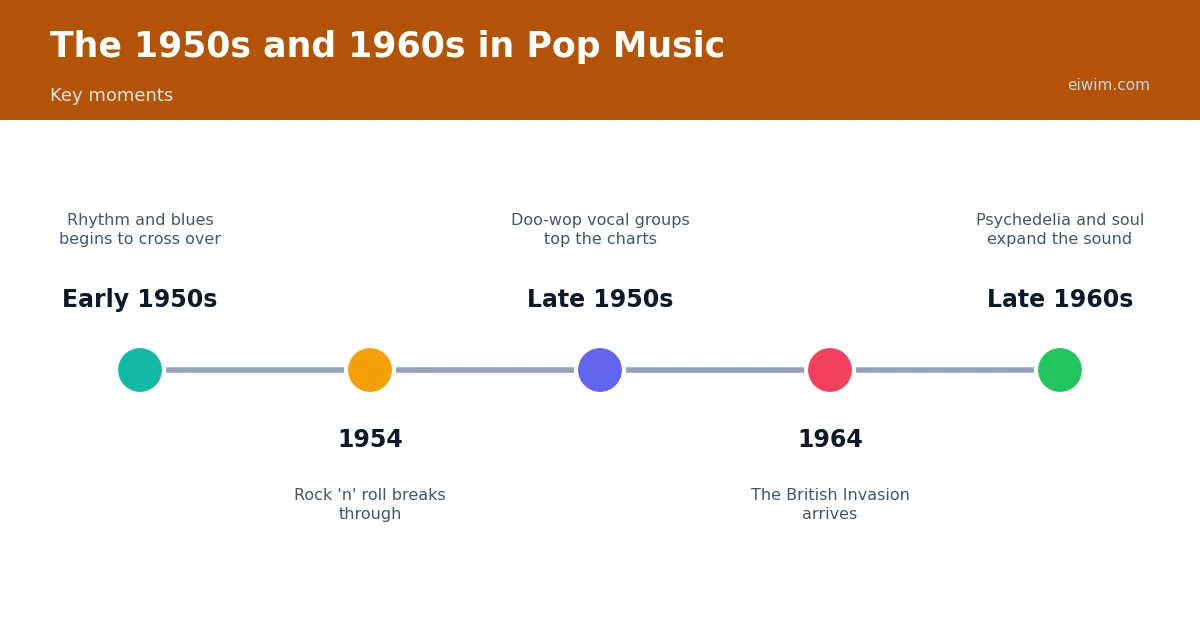
Oldies radio is built on nostalgia, but it is also an education in how modern popular music began. The 1950s and 1960s were a time of rapid change, when rock 'n' roll, doo-wop, soul and the British Invasion transformed what people listened to. If you have never explored these decades, an oldies station is the easiest way to hear the music in order and in context. This guide explains the main styles and how to find them online.
What does "oldies" mean?
The term has changed over time. In the 1970s, oldies usually meant songs from the 1950s and early 1960s. Today the word is used loosely: some stations play the 1950s to the 1970s, others focus on the 1960s alone, and "classic hits" stations often cover the 1970s to the 1990s. On Eiwim you can find stations in the Oldies, 60s and Rock'n'Roll categories, and decade stations such as 70s and 80s cover later periods.
The birth of rock 'n' roll
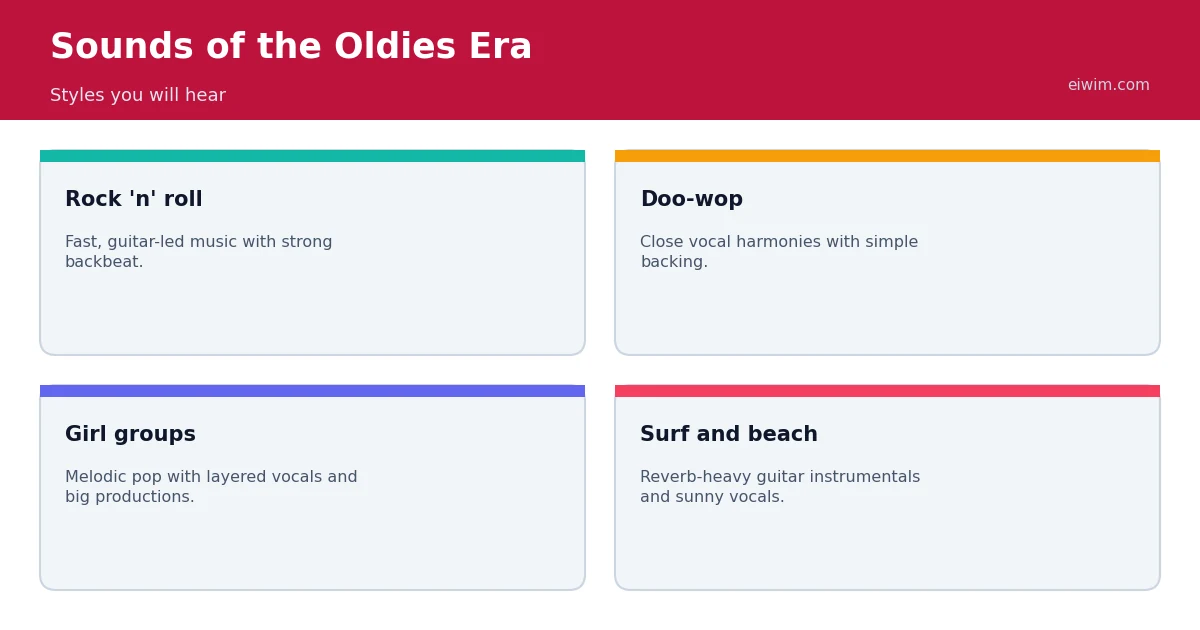
In the early 1950s, rhythm and blues music by Black artists began reaching white audiences, and young listeners were drawn to its energy. By the mid-1950s, rock 'n' roll was a major force. Bill Haley's "Rock Around the Clock" was a huge hit in 1955, Elvis Presley made his first recordings for Sun Records in Memphis in 1954, and artists such as Chuck Berry and Little Richard shaped the guitar and piano styles that would define the genre. The sound was loud, danceable and rebellious, and it created a new idea of teenage culture.
Doo-wop and vocal groups
At the same time, vocal groups were becoming popular. Doo-wop used close harmonies, often with a lead singer, backing syllables and simple instrumentation. It grew out of street-corner singing in American cities and produced many songs that radio still plays. If you want a warm, nostalgic sound, doo-wop is a good place to start.
Girl groups and the pop machine
In the early 1960s, girl groups such as the Shirelles, the Ronettes and the Supremes brought a polished, melodic style to the charts. Songwriters and producers in New York's music publishing district, including those working at the famous Brill Building, wrote many of the hits. Producers such as Phil Spector built a dense "wall of sound" with layers of instruments and echo. These records show how studio techniques became part of pop.
The British Invasion
In 1964, British bands arrived in America with huge impact. The Beatles appeared on American television in February of that year, and bands such as the Rolling Stones and the Kinks followed. They were inspired by American blues and rock 'n' roll, which they played back to the US with new energy. This exchange between the UK and the US shaped popular music for decades.
Soul, Motown and folk rock
Other important movements ran in parallel. Motown and Southern soul gave the 1960s some of their most memorable songs, as covered in our guide to soul, Motown and R&B radio. Folk rock mixed acoustic songwriting with electric instruments, and by the end of the decade psychedelic music and heavier rock were pushing the sound in new directions, laying the groundwork for Classic Rock.
Why oldies still work
Oldies stations succeed because the songs are short, melodic and well written. Many were designed for radio and for the three-minute single format, so they fit the medium perfectly. They also appeal across generations, since many younger listeners discover these songs through films, television and covers. A presenter who tells the story behind a record adds depth that you would not get from a playlist alone.
Tips for listening
- Pay attention to the production. Early records often used just a few microphones, and you can hear how the sound became more complex through the decade.
- Follow the instruments. In rock 'n' roll, piano and guitar share the lead. In doo-wop, the voices are the instruments.
- Compare versions. Many songs have been recorded by several artists, and comparing them shows how arrangements change.
- Listen to presenters. Many oldies programmes include history, trivia and listener memories.
Oldies around the world
Oldies radio is not only American. In Germany, France, Italy, Spain and many other countries, stations play both English-language classics and local hits from the same period. You can compare how each country remembers the era by browsing the countries page. If you want to hear the earliest sounds, try Swing, which covers the big-band and dance music of the 1930s and 1940s.
The role of the radio DJ
Radio played a central role in the rise of rock 'n' roll. Disc jockeys chose which records reached the public, and some became stars themselves. The American DJ Alan Freed is often credited with popularising the term "rock and roll" on the radio in the early 1950s, helping to present rhythm and blues to a wider audience. Listening to an oldies show today, you will often hear presenters who still talk like those early DJs, with a mix of music, jokes and stories about the records.
An easy oldies listening plan
If you want to hear the era in order, you can follow a simple plan. Start with a 1950s rock 'n' roll hour to hear the raw energy of the early years. Move to a doo-wop programme for the vocal harmony side. Then listen to a 1960s hits station for the girl groups, soul and British bands. Finally, finish with a late-1960s hour to hear how the sound became more experimental. You will hear how quickly the music changed within only fifteen years.
Jukeboxes and the single
Many oldies were originally released on 45 rpm singles, small records that were played on jukeboxes and radios. The short format of about three minutes shaped how songs were written, with a strong hook early on and a clear chorus. That is a large part of why these songs still work so well on radio today.
Frequently asked questions
What years do oldies cover?
It depends on the station. Many play the 1950s and 1960s, and some extend into the 1970s.
What is doo-wop?
A style of vocal-group music from the 1950s with close harmonies, nonsense syllables and light instrumentation.
What is the British Invasion?
The wave of British bands that became hugely popular in the US from 1964, led by the Beatles.
Are oldies only in English?
No. Many countries have their own oldies, and stations in different languages play local hits from the 1950s and 1960s.
Find more eras on the genres page.