
Soul, Motown and R&B Radio: A Guide to the Sound
October 15, 2026 · Updated November 01, 2026
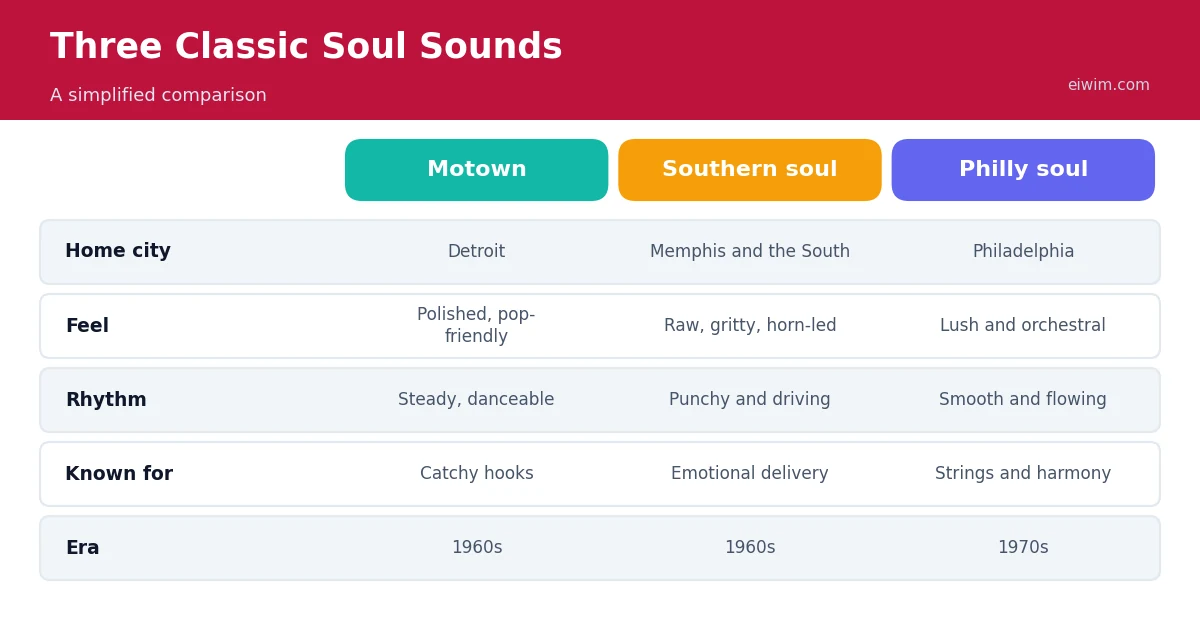
Soul and R&B are among the most beloved sounds in popular music. They are built on warm voices, strong rhythm sections and emotional lyrics, and they have influenced nearly every style that followed. Whether you want a classic record from the 1960s or a modern slow jam, soul and R&B radio gives you a long, rich playlist. This guide explains the history and the sounds to listen for.
What is the difference between soul and R&B?
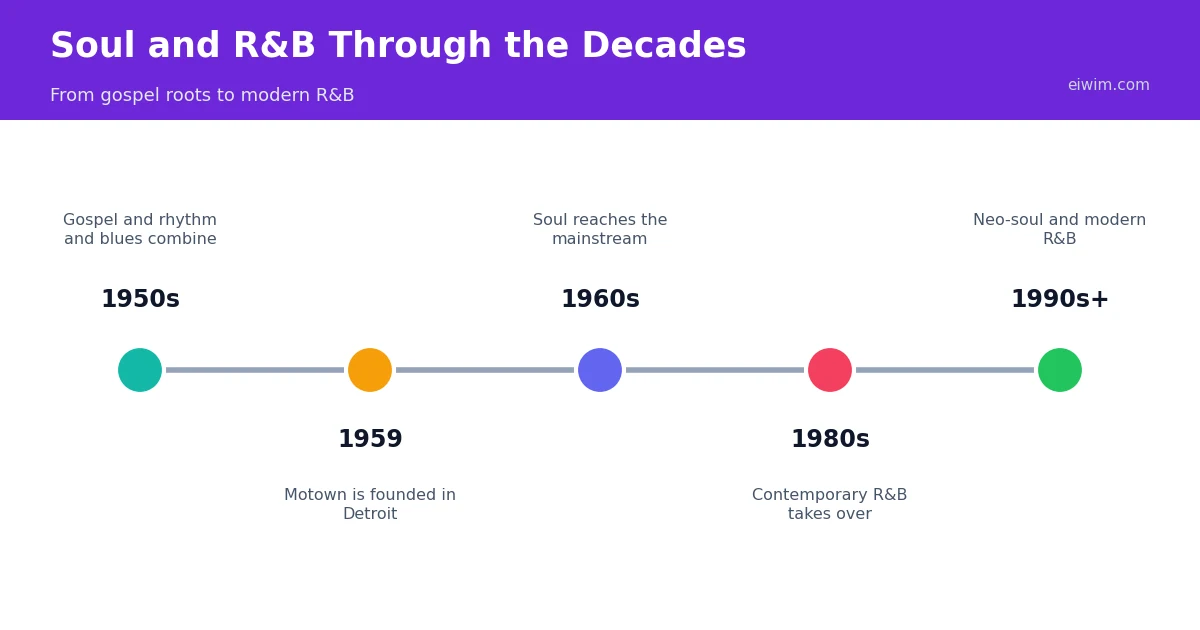
The labels have changed over time. In the 1940s and 1950s, "rhythm and blues" described African-American popular music that mixed jazz, blues and gospel with a strong beat. In the 1960s, soul grew from that mix and emphasised gospel-style vocals and intense emotion. Since the 1980s, "R&B" has usually meant contemporary R&B, a smoother, more produced sound often mixed with hip hop and pop. Many radio stations use both terms, so you will hear artists from every era.
Gospel roots
Soul singers were often trained in church choirs, and the call-and-response patterns, vocal runs and emotional delivery of gospel shaped the style. When gospel techniques met secular lyrics about love and life, soul was born. To hear where those techniques came from, listen to Gospel stations. Our guide to gospel and Christian radio explains the connection.
Motown
Motown Records was founded in Detroit in 1959 by Berry Gordy, and its studio became known as Hitsville U.S.A. The label aimed to create music that appealed to both Black and white audiences, with catchy melodies, polished arrangements and a house band whose steady rhythms became known as the Motown sound. Its stars included many artists whose songs are still played every day. If you want that classic sound, try the Motown category and the 60s stations.
Southern soul and Philadelphia soul
Other cities developed their own styles. Southern soul, often associated with Memphis and the Stax label, was rawer and horn-driven, with gritty, emotional vocals. In the 1970s, Philadelphia soul added lush strings and smooth arrangements, and it influenced disco. Aretha Franklin's string of hits in the late 1960s, recorded with a mix of musicians, demonstrated how powerful gospel-inspired singing could be.
Funk, disco and the 1970s
As the 1970s began, soul branched out. Funk emphasised the rhythm, putting the bass and drums at the centre, while disco turned soul and funk into dance music for clubs. You can explore these on Funk and Disco stations. Many hip hop producers later sampled funk and soul records, so these stations are also a good way to hear the sources of modern beats.
Modern R&B and neo-soul
In the 1980s and 1990s, R&B became smoother and more electronic, with drum machines, synthesizers and layered vocals. New styles such as new jack swing blended R&B with hip hop beats. Later, neo-soul brought back the warmth of classic soul with modern production. Today, R&B often sits alongside pop, hip hop and electronic music on streaming platforms, and you can hear all of it on R'n'B and Urban stations.
How to find your style
- For classic sounds, start with Soul, Motown and Oldies.
- For dance-friendly grooves, try Funk and Disco.
- For modern music, use R'n'B and Urban.
- If you enjoy the vocals, listen for the way singers hold notes, add runs and answer the band. These are signs of gospel influence.
Why the music lasts
Good soul songs combine strong melodies with real emotional weight, and their rhythms still make people move. They are also deeply tied to social history, because much of the music was made during the civil rights era and often reflected the hopes and struggles of its time. That depth is part of why new listeners keep discovering it.
Related reading
To follow the family tree, read blues radio from the Delta to Chicago and hip hop radio and its subgenres. If you enjoy dancing, see our guide to Latin music radio.
A starter listening journey
You can understand soul quickly by listening to a few voices. Sam Cooke bridged gospel and pop in the late 1950s and early 1960s. Otis Redding became a leading voice of Southern soul, and Aretha Franklin is widely regarded as one of the greatest soul singers of all time. At Motown, artists such as Smokey Robinson, the Supremes, the Temptations, the Four Tops and Marvin Gaye helped define the label's sound, and Stevie Wonder began recording for the label as a child and grew into one of its most creative artists. Later, Al Green brought a smooth, intimate style to Memphis soul. Again, you do not have to learn every name, but when you hear one on the radio and like it, it is worth noting down.
The musicians behind the voices
Much of what makes soul records special comes from the studio bands. At Motown, a group of session players known as the Funk Brothers created the label's grooves, and at Stax in Memphis, a house band that included Booker T. & the M.G.'s played on many classics. Their tight rhythm sections, melodic bass lines and subtle details are as important to the sound as the singers. When you listen, try following the bass for one song, then the drums for the next, and you will hear parts that you may have missed.
Why soul remains popular on radio
Soul and R&B stations appeal to a wide range of listeners. Older listeners enjoy the songs they grew up with, younger listeners discover them through samples and covers, and many people simply like music that is warm and human. Because the songs are often short and melodic, they work well in a radio format, and they fit many moods, from romantic evenings to energetic mornings.
Frequently asked questions
What does R&B stand for?
Rhythm and blues. It began as a label for African-American popular music in the 1940s and is now used for a broader range of styles.
What is the Motown sound?
A polished style with catchy melodies, strong bass lines, tambourine and tight arrangements, associated with Motown Records in Detroit in the 1960s.
Is soul the same as gospel?
No, but it grew from gospel. Soul uses gospel singing techniques in secular songs about everyday life.
Where can I hear classic soul?
Try Soul, Motown, Oldies and 60s stations on Eiwim.
Browse every style on the genres page.