Top 40 and Hits Radio: How Charts Shape What You Hear
October 05, 2026 · Updated November 01, 2026
If you have ever wondered why the same songs seem to come around again and again on a pop station, the answer lies in how Top 40 and hits radio is built. These stations are designed to play the music that most people already like, which is why they can feel so familiar. This guide explains how the system works and how to use it to find music you enjoy.
What does "Top 40" mean?
The name comes from the idea of a station playing the 40 most popular songs of the moment. The format took shape in the United States in the 1950s, when stations competed for audiences and found that a tight playlist of popular songs, repeated often, kept people listening. Today the numbers are not always literally 40, but the principle is the same. A Top 40 or "hits" station concentrates on current chart songs. In the modern industry this style is often called contemporary hit radio.
What are the charts?
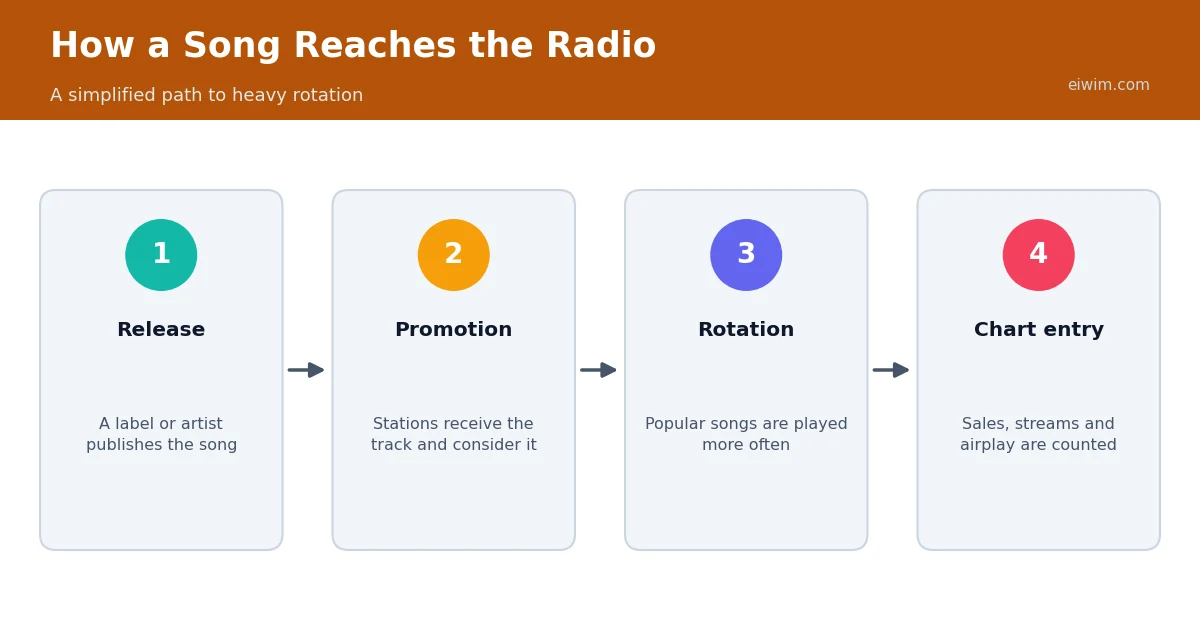
A chart ranks songs by popularity. National charts have been published for decades. The United Kingdom's singles chart dates back to 1952, and the Billboard Hot 100 in the United States started in 1958. Early charts were based on record sales. Over time they added radio airplay, and in the 2010s they began to count streaming too. That means a song can now climb a chart through online listening even if radio has not yet embraced it.
Charts and radio influence each other. A song that gets a lot of airplay becomes more familiar and often sells or streams more. A song that streams strongly becomes a candidate for radio playlists.
How rotation works
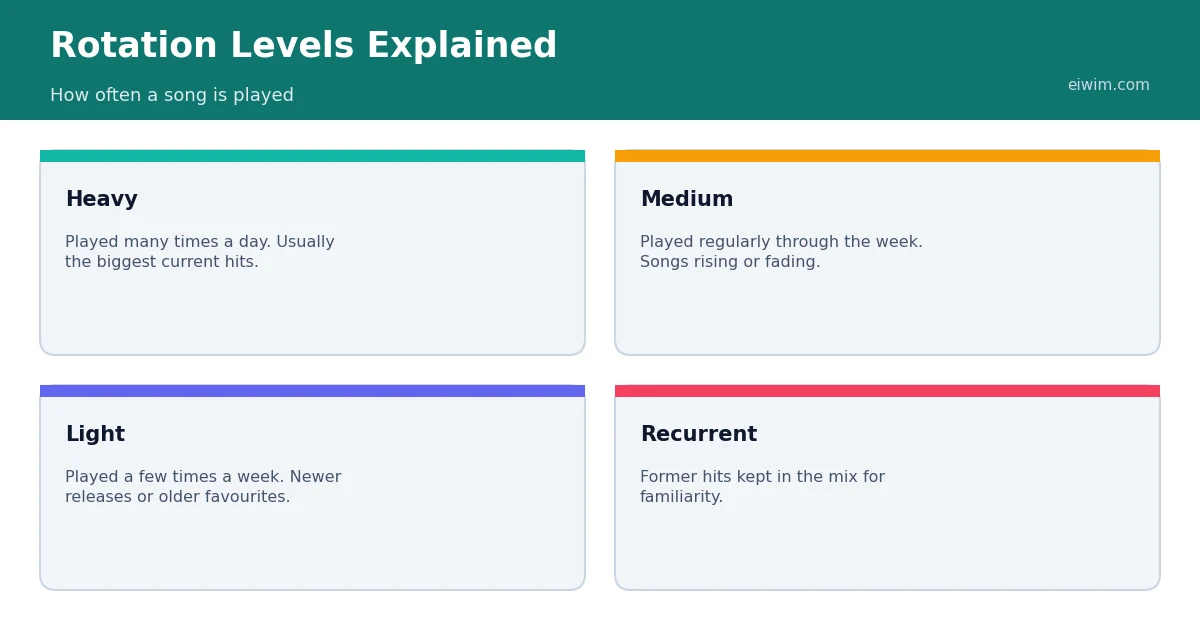
Stations keep lists of songs in categories called rotations. Heavy rotation songs play many times a day, medium rotation songs play regularly through the week, and light rotation songs play a few times. Many stations also keep "recurrent" songs, which are recent hits that have dropped out of the heaviest rotation but are still popular. Programmers adjust these lists weekly, using listener research, streaming data and their own judgement.
This is why a new song can feel inescapable for a few weeks and then gradually appear less often. It is also why hits stations sound similar to each other: they are all drawing on the same pool of popular songs.
Why hits stations repeat songs
Repetition is a deliberate strategy. Research on listening habits has long suggested that people enjoy music more when it is familiar. A hits station balances new songs, which keep the playlist fresh, against well-known songs, which keep listeners comfortable. For a listener who only wants background music, this can be ideal. For someone who wants variety, it can feel limiting.
Hits, Top 40 and Pop: what is the difference?
On Eiwim you will see several related categories, and they overlap:
- Top 40 & Charts focuses on chart-driven stations, usually with a strong emphasis on the newest songs.
- Hits is slightly broader and often includes recent favourites from the past few years.
- Pop describes the style of music rather than a format. A pop station may mix new songs with older ones, and may not follow charts closely.
If you prefer songs from a specific period, look at decade stations such as 80s and 90s, which work like hits stations for a past era.
How to find variety
- Try stations from other countries. Charts differ by country, and a station in Germany, France or Brazil may play songs you would not hear at home. Browse the countries page to explore.
- Look at specialist stations. Alternative, Indie and Electro stations often play new music before it reaches the charts.
- Listen in the evening or at weekends. Some stations run specialist shows outside peak hours.
- Follow what you like. When you hear an artist you enjoy, search for stations in a similar genre. Our guide to discovering new music through online radio has more ideas.
Are hits stations bad for music?
Critics argue that tight playlists limit what listeners can hear and make it harder for new artists to break through. Supporters reply that hits stations give people the music they already want and give pop acts a way to reach large audiences. In practice, the two sides coexist. Listeners who want familiar songs can use hits stations, and listeners who want to explore can use specialist ones. Online radio makes it easy to switch between them.
Tips for getting more from hits radio
- Use it as a quick way to hear what is popular in a country or language.
- Pay attention to the presenter. Many shows include interviews, countdowns and new-release segments.
- If you notice a song you like, note its title and look it up so you can find more by the same artist.
- Combine a hits station with a specialist one so you hear both the popular and the unfamiliar.
How to read a station's format
Station names and descriptions often tell you what to expect. Words such as "hits", "top", "charts", "now" or "hot" usually indicate a current-music format. Words such as "classic", "gold" or "retro" suggest older songs. Genre tags help too. A station tagged with several broad categories, for example Pop and Hits, is likely to play a wide range of popular music, while one tagged only with Top 40 & Charts will concentrate on the newest songs. If you are not sure, listen for ten minutes and note how many songs you recognise. A high number of familiar songs suggests a hits format.
What presenters add
On a hits station, the presenter is as important as the playlist. Morning shows combine music with news, jokes and competitions. Afternoon shows might focus on new releases or celebrity news. Evening and weekend shows often include countdowns of the biggest songs of the week. These segments make it easy to find out what is popular right now and which songs are rising, which is useful even if you do not enjoy the heaviest-rotation songs.
Frequently asked questions
Is Top 40 radio the same as pop radio?
Not exactly. Top 40 describes a format based on charts. Pop describes a style of music. Many Top 40 stations play mostly pop, but they may also include hip hop, dance and rock hits.
How often are playlists updated?
Many stations adjust their lists weekly, adding new songs and moving others down in rotation.
Why do I hear the same song several times in one day?
Heavy rotation songs are played many times a day because they are the most popular and the format is built on repetition.
Do charts include streaming?
Most major charts now include streams alongside sales and, in some cases, radio airplay, although the exact rules differ by country.
Whether you like the familiar or the new, you can browse every style on the genres page.